The best tier-list idea has two ingredients: a set of things people recognize and a question worth debating. “Rank all games” is too broad. “Which games would I replay from the beginning?” gives the ranking a point of view.
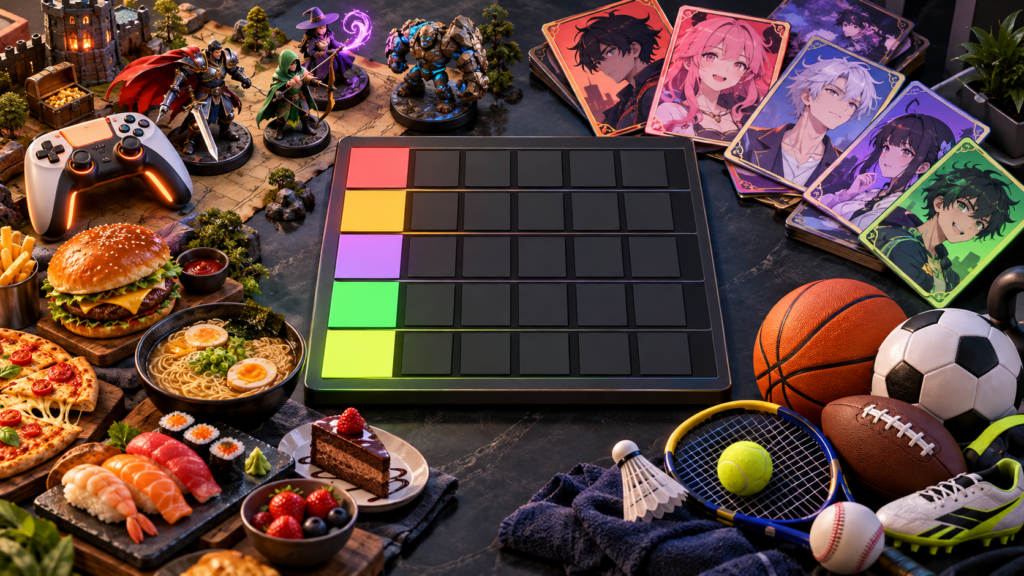
Here are some topics to try.
Games
Rank playable characters by strength, maps by how much you enjoy them, or game soundtracks by how often you return to them. You can also rank bosses by difficulty or games in a series by the experience they gave you. Say whether the list is about competitive performance or personal enjoyment; those can produce very different results.
Anime and manga
Try favorite characters, story arcs, openings, rivalries, or series you would recommend to a newcomer. A character list becomes more interesting when you choose a criterion such as writing, design, or development instead of an undefined “best.”
Food and drink
Fast-food restaurants, pizza toppings, snacks, breakfast foods, and desserts all make approachable lists. Food rankings are personal, so a strong opinion is part of the fun. A list of “foods I would order again” may be more useful than a claim about the objectively best food.
Sports
Rank teams, stadiums, uniforms, memorable matches, or players from a particular era. For performance-based lists, state the season or period you are considering. That keeps the comparison fair and makes the article understandable later.
Movies, music, and everyday life
Movie villains, albums, TV finales, vacation spots, hobbies, and household gadgets can all work. The most shareable ideas often come from a familiar topic with a specific twist: “comfort movies,” “songs for a long drive,” or “places I would revisit.”
If you cannot decide, pick a topic your friends would disagree about. That usually means there is enough variety to make the ranking interesting. Explore existing templates, or make a tier list from scratch.